

Stage Cable Manufacturer: What Buyers Actually Need to Know Before Ordering
Most people give little thought to their cables until they fail at an inopportune moment (like during a performance). Whether you’re a lighting technician or an engineer working on live sound, a single bad connection can cause an entire production to fail. So, selecting the appropriate manufacturer of Stage Cable Manufacturer may be more important than most buyers think.
When you are outfitting a touring company, stocking up your rental business, or creating an installation, you“re going to find that the quality of your cables will either stand up to rugged use (having been used night after night) or (quietly) cause problems for you. This guide walks through how to choose the right ones, provides some basic information on the cable types, and will help you identify a good manufacturer (as opposed to one who is simply selling cables at a lower price).
What a Stage Cable Manufacturer Actually Makes
A stage cable manufacturer encompasses a large catalog of different products. At a basic level, these products can be boiled down into three areas: signal cables, power distribution cables, and control cables. Each of these product categories has unique requirements for how the cable must be constructed. Therefore, when a manufacturer builds all three product types effectively, they typically also have an established manufacturing environment and a strong knowledge regarding what it takes to perform during a live event.
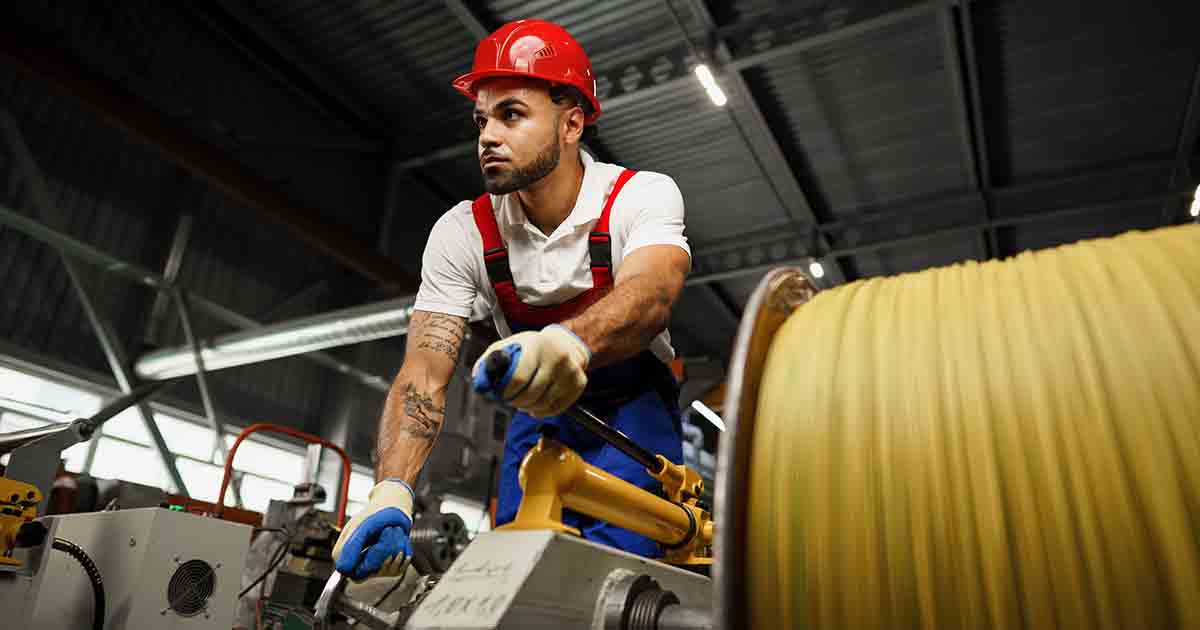
The majority of quality cable manufacturers provide assemblies (cables cut to length and terminated with connectors) and tested prior to shipment. Some will also offer installers the ability to order large quantities of cable (bulk) on reels for them to complete the project using their own tools/equipment. The best suppliers provide both options along with a variety of minimum order requirements.
What Type of Product Should We Be Concerned About Below is a simple overview of the different types of cables and what makes them different in terms of how we make them: – DMX – This is used to control the lights from a distance. They are required to have 110 ohm of impedance, and they have to be tightly twisted so there are no problems with data transmission lengthwise.
⇒ Socapex cable is a multi-circuit type of electrical power cord designed for distributing electrical power to Stage Cable Manufacturer lighting fixtures. The 19 pin connector allows many circuits to pass through the same cable resulting in stringent conductor sizing and shielding requirements to ensure peak safety.
⇒ Audio snakes are used as multi-channel audio cables connecting from the Stage Cable Manufacturer to the FOH position. Audio snake cables must reject cross talk and maintain consistent impedance throughout all channels. – Stage Lighting Few, like the audio snake, also provide general power and data cabling for lighting rigs. Stage lighting cables provide DMX and dimmer circuit power and data, along with the power for moving lights.
DMX Cable Manufacturing: Why Impedance Is Everything
The internationally recognized protocol used to control Stage Cable Manufacturer lighting is called DMX512. It operates via RS-485 communications, which uses a cable that has a characteristic impedance of 110 ohms. Although one could use a microphone cable that has connectors compatible with DMX512, you will experience some kind of signal error if you are using longer runs, over 100 METERS with an RS-485 with the proper characteristic impedance.
To create a quality DMX cable, a good cable manufacturer should provide specific information about impedance for each cable, utilise twisted pairs with a consistent length of lay, and usually include a shield to help prevent noise. In addition, a good manufacturer’s outer jacket will be flexible enough to allow coiling and uncoiling several times without cracking. Conductors should use stranded wire, as opposed to solid conductor wire.
An alternate approach could be First, remember to ask for the impedance spec from a DMX cable manufacturer prior to purchasing any cables such as DMX cables and Socapex cables. If the manufacturer can’t give you the number, it’s time to consider a different supplier.
How to Understand Socapex Cables in Stage Power Distribution.
The term socapex, a play on the company that manufactures the connector, has become synonymous with all 19-pin 6 circuit connectors used for dimmer packs and theatrical lighting. Each circuit of the standard socapex includes a 2.5mm² (12 AWG) conductor.
A socapex cable’s quality or lack thereof is distinguished primarily by only three factors. They are consistency of conductor cross-section area, insulation rating, and quality of connector termination. When conductors are sized smaller than they should be, the cable will get hot during operation due to excessive load. Connectors that are poorly terminated will develop a resistance with time, which becomes both a performance problem and a safety issue.
The manufacturer who specializes in this type of equipment should have knowledge of IEC 60309 and EN 60320 and will provide their products with at least a CE mark. If you are purchasing in North America, it is always advisable to inquire if the cable is approved by an ETL or UL listing. Questions to Consider When Sourcing Socapex Cable – What are the conductor size and insulation ratings for the cable? – What certification does the cable carry? – Is the connector a genuine Souriau/Socapex part or a third-party clone?
What is the bend radius and how does it perform in cold weather?
Audio Snake Cable: Building Multi-Channel Reliability
An audio snake combines multiple balanced audio lines into a single cable so that there is less clutter on Stage Cable Manufacturer and easier setup. Audio snakes typically come in standard sizes from 8 to 32 channels, although larger installations often use custom configurations.
The key specification of concern is crosstalk, which is basically interference between two or more adjacent channels (as an example, one channel will affect another channel due to an imbalance in the two channels). A manufacturer who produces high-quality audio snake cables uses separate pair shields for each individual pair of wires inside the overall cable jacket, which allows you to use each channel with its own foil or braid-type shield (compared to only using a single outer shield for the entire cable).
A cable’s outer jacket should be able to withstand foot traffic and repeated rolling without splitting, so an outer jacket built from an OFC (oxygen-free copper) conductor is very desirable, especially for longer distances, where signal loss becomes noticeable. Tip: In cases of touring equipment, look for a cable that has strain relief at the breakout point (where it goes into the amp or lighting console) to prevent the cable from being damaged due to the large amount of stress that occurs there over time. — Stage Lighting Cable – What the Touring Industry Has Learned.
Cables for Stage Cable Manufacturer lighting take a lot of abuse; they are often coiled, dragged across concrete floors, left out in the rain on outside stages, and walked on by crew members who are commonly rushing around. The cable jacket compound, generally PVC or polyurethane, can determine how long the cable will last in this type of environment.
Standard PVC jackets and polyurethane jackets differ significantly when it comes to resistance to oils, abrasion, and ultraviolet light. Polyurethane jackets also remain flexible in cold conditions, making them ideal for use in outdoor winter productions. The downside of polyurethane jacketed cables is the increased cost; polyurethane jacketed cables typically cost from 20–40% more than the equivalent PVC jacketed cable.
In addition to DMX & data cables in lighting rigs, they also need to ensure their shielding is durable. The first thing to go are the poor shields at the flex point, this will cause a lot of intermittent faults that are difficult to troubleshoot on show day when the event is busy.
Evaluating a Stage Cable Manufacturer Many different factories produce stage cables, especially in China or Eastern Europe with a large variety of quality. What separates the dependable from the unreliable suppliers? Here are some good indicators to assist you in determining whether or not the manufacturer of a stage cable is reputable.
Look for Certifications, Not Just Claims
All products sold in Europe need a CE mark, or a certificate of conformity, showing they comply with the relevant EU directives and are safe for use in the EU; so you have to be sure your product can be sold without a CE mark if it doesn’t have one yet. Products certified under TUV, ETL & UL are third-party verified and much less likely to be counterfeit products than others. A manufacturer that holds valid certification has had the product tested externally, which is a “real world” indicator of quality. When you see a manufacturer that has valid certification, this gives you some good information about them and their products (for example; how well they performed on previous tests). You can also look for the manufacturer’s address listed on their site to see if it fits within your trusted suppliers list.
Experience in the Specific Category Matters
When comparing the experience of manufacturers in producing audio cables, a manufacturer who has only been building audio cables provides a different experience than a manufacturer that has been building power distribution cables for ten years before they began producing audio cables. Be sure to inquire about their specific history with a cable type.
MOQ and Lead Time Flexibility
Rental and large production companies need mixed orders which means buying one or two items at different small amounts vs. larger amounts. Having a manufacturer that is flexible in their minimum order quantity is more valuable than having a manufacturer with rigid tier pricing.
Sample Testing Before Full Orders
A reputable Stage Cable Manufacturer should provide you with samples. If they don’t, there is a clear indication that they aren’t a credible source. To evaluate samples, perform extensive tests under real-world conditions, such as repeatedly plugging and unplugging the connectors; check impedance with a cable tester; bend the cable at sharp bend angles; inspect the termination quality under magnification.
Concluding Remarks Cables for Stage Cable Manufacturer use tend to be a type of product where the lowest price version will end up costing a person far more over time due to failures, time lost, and in addition to that, in live production, time is money — worse yet (if you have a failure), could ruin the show.
A credible Stage Cable Manufacturer supplier should present documentation on specifications, appropriate certification, experience in your category, and conceive flexibility in working with the size of your order. They all seem pretty standard; however, these criteria narrow down suppliers who simply buy commodity products and apply their company’s branding to them.
Be sure to request samples so you can properly test the product, and don’t be afraid to ask the manufacturer direct questions pertaining to the constructed details of the product. If the manufacturer can effectively communicate the answers to your questions without using vague or unclear language, that manufacturer is one you want to build a relationship with.