
3D Printing in Manufacturing: A Practical Guide for Industrial Buyers
You understand how frustrating it can be waiting several weeks for a prototype to arrive only to realize it requires changes; therefore, the reason so much focus is placed on 3-dimensional printing in the world of manufacturing is relatively clear. 3D printing is not a miraculous product, nor will it eliminate every process currently performed on the floor of a shop; however, when utilized correctly, it provides solutions to issues that traditional methods do fail to solve.
In this article, we explain industrial 3D printing, how it relates to other processes such as CNC machining, laser cutting, sheet metal fabrication and die casting, as well as what to realistically expect when purchasing or engineering using 3D printing technology.
What Is 3D Printing in an Industrial Context?
Most people first encounter 3D printing through plastic desktop printers. Industrial 3D printing is a different category entirely.
3D printing is a form of industrial production that constructs objects in successive layers from a digital file. It differs from traditional product development methods, such as computer numerical control (CNC) machining, where material is removed to create parts; and from metal casting or sheet metal working, where material is pushed into a shape by applying force to it. The 3D printing machine builds an object by adding material only to the location needed.
This is important for many reasons, such as the fact that it is now possible to produce complex parts with internal geometries that could have been impossible to manufacture using traditional approaches. Additionally, waste is reduced significantly because there is less cutting and so forth. Thirdly, you can go from a CAD file to a physical part in just a matter of days instead of weeks.
What Can Be 3D Printed for Industrial Use?
Industrial use of 3D printing can incorporate many in-coupling materials including plastic and based on the allotted process you can manufacture the following products:
1. Titanium Alloys – Used heavily within the aerospace and medical industries.
2. Aluminum Alloys – Used heavily to create robust structures with little weight added to them.
3. Stainless Steel – Utilized in applications that require the material to have corrosion resistant properties.
4. Tool Steel – Utilized as a material for making tools or dies.
5. Polymer and Resin – Used when you’re looking to develop functional prototypes or are looking to create low load products.
Selective Laser Melting (SLM) and Direct Metal Laser Sintering (DMLS), are both processes that involve melting metal particles together, using a laser, in layers that build up—forming your final 3-D object from the bottom up. These machines cost quite a bit; however, the resulting parts produced by them may be equal to or better than traditionally produced parts in terms of mechanical performance.
3D printing can be understood by comparing it to other manufacturing processes. There are many methods of manufacturing whereby 3D printing competes with those methods, but there are also some instances when it is not in competition.
3D Printing vs. CNC Machining
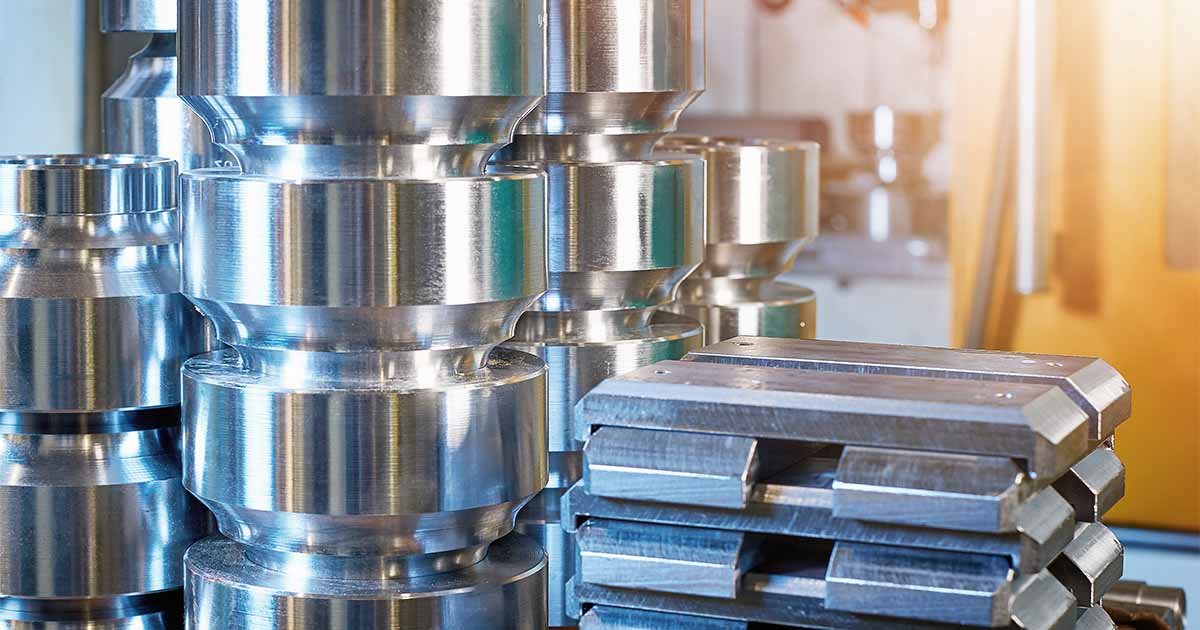
Rotating tools are used by CNC machines to create parts by removing material from a solid piece of material. CNC machines generate accurate tolerances as well as superior surfaces and can manufacture all types of materials, including metals, plastics, composites, etc. CNC machining is typically the best choice when manufacturing a large quantity of parts or when the parts need to be made with highly accurate dimensions.
The following are examples of when 3D printing provides advantages over traditional manufacturing: Complex Geometry; One-Offs or Small Batches; Fast Prototype Creation. The two processes may be used in conjunction; a 3D printed part can often be CNC machined afterward to reach final tolerances.
3D Printing vs. Sheet Metal Fabrication
Processes such as laser cutting, CNC bending, stamping, and welding utilize sheet metal materials to create flat or shaped components. They provide rapid production, repeatability, and reasonable cost per part in high-volume production environments. Enclosures, brackets, panels, and structural frames are all typical applications for sheet metal manufacturing processes.
Most sheet metal manufacturing has little practical benefit from 3D printing. Parts made with sheet metal can typically be fabricated faster and cheaper using traditional methods such as bending, cutting, and welding as compared to using 3D printing. If the part’s design incorporates features such as free-form curves, internal channels, or limited volume requirements (small amounts), then printing may be a practical option.
3D Printing vs. Metal Casting
Die casting, sand casting, and precision casting are examples of metal casting that are highly efficient for production at scale because producing hundreds or thousands of identical parts is possible at a low cost per unit with a previously created mold since there is a large upfront cost in the tooling used to create the molds. Tooling costs are avoided completely when manufacturing with 3D printing, so there is great benefit from that for prototype quantities or very customized parts; however, for larger production runs (in the thousands), the cost per unit will almost always be less for castings than for 3D printing.
The typical workflow that most companies will utilize is to prototype in 3D printing, validate the design, and then move to metal casting for production. This helps to avoid the use of expensive tooling before you have validated your final design.
Where Does 3D Printing Provide Real Value?
The honest answer to this question is that 3D printing is not suitable for all applications. Here are the applications that 3D printing consistently provides value: – Prototyping and validating designs. 3D printed prototypes will allow users to have an actual physical part in their hands prior to utilizing manufacturing tooling to make parts, preventing costly mistakes. From the time of prototyping to using the manufactured product, 3D printed prototypes are able to provide validation of fit, functionality, ergonomics, ergonomics, and other structural integrity. 3D printed prototypes will provide operators and designers the ability to test and evaluate within days.
1. Low-volume production: When you need 5–50 parts, casting tooling is hard to justify. 3D printing fills that gap cleanly.
2. There are some notable differences between these two types of letters: Don’t forget to adjust title, size, and fonts to create visual appeal. Use graphics sparingly and only if they enhance the message of each letter.
Example: You could use a photo of a room with furniture as your graphic for the message.
Finally, use two styles of fonts and colors at least once in each letter you send out. You will want one style of font for the main part of the letter and another style or color for your signature.
When compared to parts that have been manufactured using machining (e.g., turning or milling), 3D printed surfaces will usually be rougher than those produced by machining. As a result, surface finishing can be performed after additive manufacturing using post-processing methods such as machining, sandblasting, or polishing. The size of an object that can be built by an additive manufacturing machine is limited by the size of the machine’s build envelop (or its printing bed).
Typically, very large components will need to be printed in smaller sections, and then stitched together in some fashion to create a full-sized part.
Metal powder raw material prices can be expensive. Additionally, although the layer-based build method works very well for building highly intricate shapes, it often creates an anisotropic effect on the part — so as a part will exhibit different physical behaviours depending on how the force is applied. None of these things are a true “dealbreaker” but they do need to be considered along with your manufacturer when selecting a manufacturing process to proceed with.
Selecting The Right Manufacturing Process To Build Your Part In most instances, when deciding whether or not to use a 3D printer as part of the manufacturing process, the thought process is typically one of how do I utilize multiple manufacturing processes to develop the final product. For most manufacturers, it is more about creating the combination of processes that works best for the given part based on required timelines and potential quantities produced.
A 3D printed part will typically first be created as a prototype, then will go through multiple design iterations before being produced in a CNC machining process with tight tolerances. Once enough parts are made from that tooling, a company may then move to produce that part using metal casting techniques.
Working with a manufacturer that has a variety of manufacturing processesations available in-house, such as casting metal, forming sheet metal (sheet metal) and doing CNC machining and 3-D printing, you will likely have a better chance of providing the customer with a good idea of which supplier to use without requiring a change of suppliers partway through the project.
Decision
3D printing is a very good method for creating things, but it works best if used in the correct situation. It is not a shortcut to an old production process or an alternative to one that already exists; it is simply another tool. The usefulness of any tool will depend on how accurately it can do the job for which it has been created.
Buyers and engineers should take a logical look at what each process does best, create clear communication with their manufacturing partnerships while considering the part’s design and production volume when making a decision.